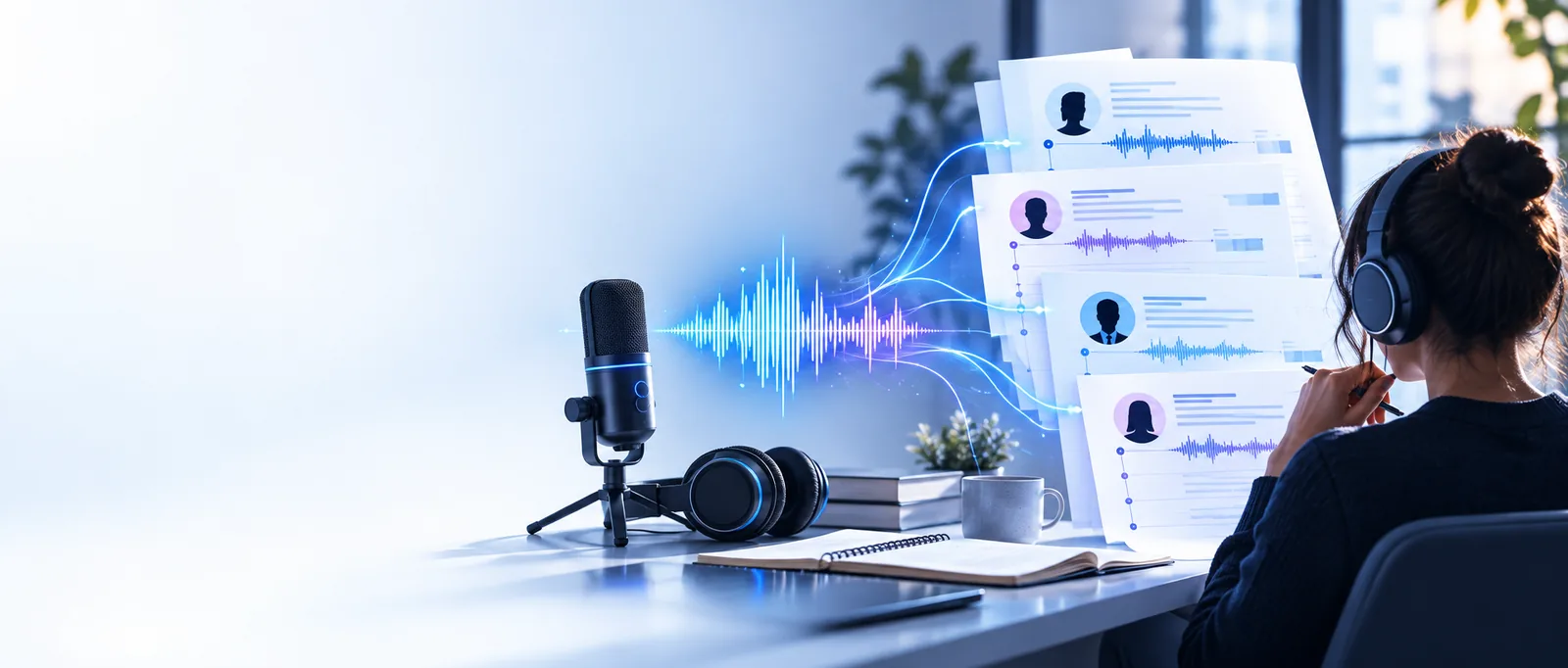
Choose a Free Audio to Text Alternative With Confidence Without Guesswork
A free audio to text alternative can be useful when your current workflow feels slow, restrictive, or difficult to review. Compare the real tradeoffs before switching.
Start with a routine file rather than your most sensitive or difficult recording. Compare the result with your current workflow for clarity, correction time, and how easily the text fits into the next step.
It is another way to turn a recording into written text without depending on the workflow you currently use. The alternative may differ in upload steps, review controls, privacy handling, formatting, or how much manual correction is required.
Not necessarily. “Free” can describe an entry-level route, limited usage, or no upfront charge, while other costs may appear through restrictions, editing time, storage terms, or additional workflow steps. Check the current access conditions before using it for ongoing work.
It depends on the purpose of the transcript. For searchable notes, a fast draft may be useful; for legal, academic, customer, or public-facing material, accuracy and careful review usually matter more than a small gain in processing speed.
Run the same ordinary recording through your current process and the alternative, then compare correction time, readability, privacy requirements, and how easily the output moves into your next tool. Keep the alternative only if it reduces total effort without creating unacceptable risks.
Only after checking your permission to process the audio and understanding how the service handles uploaded files and generated text. For sensitive material, privacy and retention terms should be part of the comparison, not an afterthought.